Wednesday, August 19, 2015

Yes, You Can Teach a Writing Class: Follow My Lead by Kathy Halsey

Utilize Your Background

First an educator, then a school librarian, now a children's writer. In my career path, I am now on job 3.5. The .5 job is my new iteration, Kathy, the writing teacher! After our move back to Ohio, I surveyed my new environment. In my small suburb, Gahanna, they have a strong parks and recreation program. When I picked up my recycle bins at city hall, I also picked up the summer program guide which had 14 pages of youth programming and tons of classes for active adults, but only one class related to writing. 
Lesson #1: I could fulfill a niche and a need.
Well-versed in researching, querying, and pitching as a writer, I repurposed these skills to craft my own class. I read the blurbs in the program guide, then created my own blurb and title. (Picture Books 101: Hard Work but Lots of Fun.) Similar to a writer's pitch, I gave a brief, enticing view of the class and what the participant would gain. I created a bio that focused on my years as a teacher, librarian, writer, and Gahanna resident.  
My cover letter (query) to the director of parks and rec explained how a well-educated suburb like Gahanna needed to provide residents with literary options along with the robust senior, camp, and children's offerings.  A month later, the assistant director contacted me, and I replied w/links to my blog and some posts from the GROG. Before my face-to-face interview, I created a possible 6-10 week syllabus for his perusal, too.
Lesson #2:  Use your writing chops to your advantage.

At our interview, I referenced my book talking "job" at indie bookstore Changing Hands. (I volunteered but could take home any book I wanted to read and return; I received 20% off all inventory.) I offered to add a program for seniors if the writing class did not suit Gahanna's needs. Just as we authors need an inventory of polished stories to offer agents/editors, I needed a few class options for the assistant director to consider.
Lesson #3: The Comparisons Continue
Gahanna City is "my agent," they take a percentage of the revenue generated by the class, and they help w/publicity, BUT, I have to do my part, also, to make the class viable. I advertise via Facebook, here with this post, through library friends, and my school library professional organization. 
Yes, just like publishing your first book, the work is all up front before the payoff. However, once I create the class content, I can teach this class for other organizations or offer a winter class for those ready to move beyond an introductory class. 

Lesson #4: I took a risk and made a bold move.
I am a pre-published writer. I could think I don't have enough to offer, but I do. I am a successful educator; I know books from my library days; I know beginning writers' needs from my English teaching years; I have an agent, Jodell Sadler. Also, I understand those newbie fears and problems since I faced them and still do at this juncture in my career.  
Last Lesson in this "Kat Chat"
Believe in yourself. Make opportunities happen. Seize your day, NOW.
Shameless promotion: The new program guide is not yet up for fall, but if you live in the Columbus area, check out registration for my class and contact the Gahanna Parks and Recreation Department.


 .

Monday, August 17, 2015

Back to School with Evelyn Christensen, an Interview by Tina Cho


It's Back to School time, and who better to interview, than my wonderful friend who runs the popular web site full of educational publishers for writers--Ev Christensen!


1. For those who might not know you, can you tell us a little about yourself? Were you ever a teacher? 

Yes, teaching was my career and I think I was always a teacher at heart from the time I knew what the concept was. In elementary school, I used to come home from school and ‘teach’ in my pretend school. I was a high school math teacher first. Then I got my doctorate in education and planned to teach math methods to prospective teachers. After ten years at home with my own preschool children, when I was ready to look for a job, I decided I shouldn’t try to tell elementary teachers how to teach if I hadn’t had experience at that level. I intended to get just a couple of years experience, but I fell in love with the little ones and chose to teach at the K-2 level the rest of my career.


2. How did you get into educational writing?

My first book, which I wrote when I was that stay-at-home mom with three young kids, was inspired by a Christmas gift of colored paper clips from one of my children to another. I was fooling around with those clips one day, entertaining the kids, and I thought, "I would be able to do something 'neat' with these. Most math manipulatives are so expensive, but anybody can afford paperclips." The result was a set of fun logic puzzles, called Clip Clue Puzzles, in which you use clues to try to determine the correct color order of the clips in a chain. The set was used for several years in a couple of classrooms before I got the courage to submit it for publication. When I did, I was blessed to have it accepted by the second publisher I sent it to.


3. What prompted you to start your awesome web site, listing educational publishers?

About eight years ago, the thought occurred to me that the results of all the time and energy I’d been expending on researching potential publishers for my own manuscripts should be shared with others. Initially, I was going to do it in book format. I’d seen a very outdated book for teachers on how to get their ideas published, and thought the market needed something more current. I even contacted another author who agreed to write the articles for the book. But for some reason (maybe a nudge from God), I changed my mind and decided to provide the information free on my website. I like being able to help others, and it makes me happy whenever someone tells me the list has been useful to them.
4. What are some of your books that have been published?


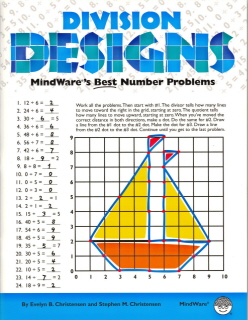
Multiplication Mosaics, my most successful book, has its 12th birthday this year. Some other popular books in that series are Division Designs, Addition Adventures, and Subtraction Secrets. Inchimals is one of my personal favorites. It’s a combination of manipulative rods and a write-on/wipe-off activity book and has won several awards.

5. Can you give our audience some educational writing tips that they might not have heard?

  • Most educational publishers prefer sets of books, as opposed to stand-alone titles. That’s because sets sell better for them. So if you have a manuscript you’re trying to get published, if you can possibly stretch it to be even two books, you’ll increase your chances of acceptance. The same is true if you’re querying an editor about an idea for a book you’d like to write. Unless the book will already be part of a series, frame your query in terms of a set of two or more books, and the response is more likely to be positive.


  • If you’re doing research for a book or article, especially if you already have a contract for it, and your research takes you to a place that has an entrance fee (like a museum or zoo), you can sometimes get free admission. I had experience with this for the first time this summer. The term that’s used is “complimentary media ticket.” Of course, some places will say no, but it doesn’t hurt to ask.

  • Being a success at writing for the educational market will likely involve sending out oodles of queries and resumes. A few writers may get prompt responses and receive enough assignments or acceptances to keep them as busy as they want to be. But many writers may feel like much of their correspondence is going into a black hole. Unless you’ve received an outright rejection, I encourage you not to lose hope. I sent out one query more than six years ago. I didn’t hear a single peep from the publisher and had long since written off that effort as futile. Then one bright day this past December, an email appeared in my inbox. An editor was asking if I were still interested in writing the book in their series I had volunteered for in my query all those years ago! So—keep sending out those letters and don’t give up hope!
Nancy I. Sanders, Ev Christensen, and Tina Cho
  • This last tip comes from my friend Nancy I. Sanders in her book Yes You Can Learn How to Write Children’s Books, Get Them Published, and Build a Successful Writing Career.  She suggests studying publishers’ catalogs to find a series written by a variety of authors. Brainstorm other titles that would fit in the series. Then query the publisher and ask if they would be interested in seeing a formal proposal for any of those titles. Since my book contract from my 6-year-old query was based on that tip, I can attest that it’s a good one.

6. What are you working on now?

I’ve just finished proofing the final copy-edited version of Graph Grapplers, a puzzle book using pictographs, bar graphs, and line graphs, to be published by MindWare next month. I’m also working on a picture book about my beloved Kentucky, which will be published hopefully in the fall of 2016.

7. You also publish the Writing for Children's Magazines ezine. How did that start? And how can writers be a part of that?

Jan Fields used to have a wonderful ezine, Kid Magazine Writer, that was very helpful to me when I first started writing for children’s magazines. When she decided to close down her site and suggested someone fill in the gap, I realized this was another way I could ‘pay it forward’ to the children’s writing community.

You can be a part of W4CM by submitting articles that relate in some way to writing or illustrating for children’s or YA magazines. Even if you haven’t been published, if you have experiences or insights that would be helpful to others, you can write an article. The other kind of article I’m looking for from writers is an overview of a sample magazine issue. All you need to write one of these is a recent issue of a magazine and the time to describe what’s in it. Examples can be seen on theW4CM website. Right now, I’m calling for submissions, so this is a great time to send either kind of article.

Just for fun:

favorite color: yellow
favorite flower:  daisy
favorite food:  fruits and veggies
favorite candy: Turtles (chocolate, caramel, pecans)
favorite subject: math
favorite pet: cats
favorite children's book/author: Dr. Seuss

Thanks so much, Ev, for taking the time to do this interview! Please visit Ev's web site if you're interested in writing for the educational market or children's magazines!


Friday, August 14, 2015

Rx for Your Critique Group ~ by Patricia Toht

Fellow GROGger Kathy Halsey wrote a terrific post Wednesday  about her experience in critique groups. I've also been a member of several groups over the years. Two were formed through the Society of Children's Writers and Illustrators (SCBWI), an international group that brings together writers for children and helps them in their writing journey. Another grew out of membership in a writing class. 

I firmly believe in the value of critique groups. They've helped me improve my writing and have also been an invaluable resource and support network in this crazy business of writing for children. If you are interested in beginning a critique group, or if you are currently a member of one, I've come across a terrific book for you. 


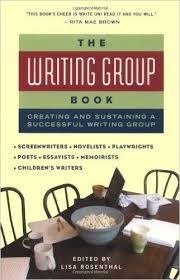
THE WRITING GROUP BOOK: Creating and Sustaining a Successful Writing Group (edited by Lisa Rosenthal, Chicago Review Press, 2003.

This book is a collection of essays from over 30 members of various writing groups, from screenwriters to novelists to kid writers. It's chockablock with information. Topics include: 
Part 1, Starting a Writing Group
Part 2, Organizing and Maintaining a Writing Group
Part 3, Why Writing Groups Flourish or Fizzle
Part 4, Venturing Beyond the Writing Group Setting


When one of my groups was faltering I sent a copy of this book to each member. We discovered a gem in Part 3 -- an essay from Kathy Briccetti, titled "Ten Reasons Why Writing Groups Flounder, Fizzle, or Fail." In Briccetti's words, we recognized three places where our group had derailed.


1) "Members use the group for the wrong reason." A critique group should NOT primarily be a social hour, book club, or therapy session. Of course those things will often be part of your gatherings, and rightly so, but it's important to keep your collective eyes on the main goal -- to improve writing and grow as a writer!

2) "There are varying levels of commitment to writing." Not everyone in our group brings texts to every meeting. But usually they are still providing important feedback to those who have. Yet, if too much time passes with no writing from a particular member, it may be time for that member to take a sabbatical and another member to join. (One of my groups still struggles with this.)

3) "Attendance is sporadic." Life is crazy, I know. But the key to making a critique group work is a firm commitment to attending. Too many delays or cancellations in meeting can be the death of a group.


Photo by David Gallagher

Luckily, we also found a remedy in the book that soon had members writing again and looking forward to meetings. 


We took a cue from an essay in Part 1, "Somehow, the Scenes Still Happen," by E.A. Bagby. Bagby describes writing in the round, having group members contribute lines and scenes to an ongoing piece. 

Our group decided to take this to the max by writing a group novel. One member wrote the opening chapter, and each month another member added the next chapter. What began as a simple wintertime story took a crazy-wicked turn, and a romantic twist popped up, too. As a picture book writer, I was really intimidated about contributing chapters, but I found that things went much more smoothly than expected. What a blast! 

I highly recommend that you buy this book, read it thoroughly, and keep it on hand for future reference. You'll be glad you did. 

Wednesday, August 12, 2015

Critique Mystic: What I've Learned by Kathy Halsey

What are the elements of a good group? How do you find a great critique group? How do you keep a good group going?  In this "Kat Chat," I'll explain what I've learned in the last 2.5 years.

 The Not-So-Good
As a new writer, I joined an eclectic group at my local indie bookstore. I had to drive 45 minutes each way once a month to get advice like "fun," "good title," "main character needs work." This group included those who wrote YA, adult, erotic, flash fiction, short stories, and romance. When I heard that a WIP about my Corgi should be in the shape of a dog, I knew I was driving too far for too little. 
A picture book in the shape of Wiley Corgi? I think not.
What I Learned
1. It can be important to be with those who write in your own genre, especially in the beginner's stage.
2. Input and output should be somewhat equal or at least substantive. My feedback did not equal the drive time.
3. Trust your instinct when it's time to go. I parted amicably with this group as I lucked into an all picture book critique group with a published author.
A MUCH Better Fit
I landed in a group of four other picture book writers who found each other via our SCBWI chapter. Dianne White and I had met at SCBWI event and hit it off. We joined forces with an illustrator/writer, a middle grade/picture book writer, a writer going through a formal program, and one more seasoned writer. We met monthly at the same indie bookstore as my former group and were able to attend SCBWI LA in 2014 and celebrate Dianne's first book, BLUE ON BLUE. Sadly, I had to leave these fab writers behind due to a cross-country move.
Dianne White, Kathy, and Elizabeth Saba, SCBWI LA 2014
The Takeaways Here
1. If one can meet face-to-face with a potential critique partner before joining a group, it is easier to see if you "jive."
2. Join a group with writers with more experience than you. 
3. Join a group with writers who have different experiences, too. Tanja Bauerle, our illustrator/writer, shared so much. She helped us see the illustrator's POV in our discussions.

The In-between
I have usually been in more than one critique group at a time. Some of the online groups fizzled out for various reasons: moves, re-evaluation of writing goals, lack of commitment to a group, or life changes. These groups served their purposes at the time and were valuable to me.
More Knowledge
1. Know that groups may naturally fizzle out or even reconnect in time.
2. Make an effort to stay connected in some way to members whose work you admire or whose critiques improve your craft. Andrea J. Loney, Lee and Low New Voices Winner, Pam Vaughn, and Lindsay Bonilla are still writer friends I can go to with any work in progress. 
3. Don't assume that critique partners will necessarily be friends (It's a bonus if you become friends), or that you did something "wrong" if a group breaks up.
The Present- A Real Present
Through my connections with Kristen Fulton's WOW nonficpic FB group, I met most of my current critique partners. We added members over time, we critique in smaller groups or on a one-to-one basis, and we all came together this year at the WOW Retreat 2015 in Georgia. We have some sort of magic glue that keeps us bound. People were even wondering how they could join our group! (Pam Courtney, Jackie Wellington, Kathleen Birmingham, Stephanie Thompson Box, and now Mona Pease.) This group of "sistas" as I call them are friends and honest, talented partners who help me grow. 
Pam and Kathy, Wow Retreat 2014
Kathleen and Mona, Wow Retreat 2015


The Critique Mystic

1. We all hail from different parts of the country: Mississippi, Atlanta, Ohio, Phoenix, Maine, Florida. This added a very unique regional component.
2. We have established rules and a formula to critique thanks to a super session at WOW Retreat 2015 by Kendra Marcus and Minju Chang. (One nugget: You are a consumer. Get what you need from your critique group.
3. We are dedicated to the goal of finishing each other's manuscripts  so that they are submission-worthy.
4. We bring different skills to the table: plot whisper, fixer of overall problems, lens of a former librarian, and 2 teachers of little ones.
I hope this post helps you see the components good critique groups  and what you can learn from your former groups. I would love to hear your critique group stories or suggestions in the comments.   


Monday, August 10, 2015

Create a Mission Statement ~By Suzy Leopold

The primary reason to create a Writer's Mission Statement is to identify one's purpose for writing, help a writer to stay focused, and to reach attainable goals. 
What is your voice for wanting to write? What is your purpose for needing to write? A clear, concise mission statement gives you a valuable tool for your writing journey.
By examining your desires, a writer is forced to think about goals and to list attainable goals and follow through to achieve them.
Created by my Cousin
Sheri McCulley Seibold
Let's get started.

1. Begin with your thoughts
Think about your hopes and dreams as a writer. Think about a mission statement as a strategy. It needs to serve a purpose for you and your writing. It must not be generic and meaningless.

  • Who are you as a writer?
  • What do you write?
  • Who do you write for?
  • Why do you write?
  • What's important to you personally and professionally?
  • What sparks you as a writer to write?

2. Focus on a goal
Brainstorm what is important to you as a writer. What goal do you want to achieve with your writing? This is an opportunity to define your goals as a writer. What is your purpose for writing? A good mission statement gives clarity and a purpose.

3. List actions
Think about what you can do to accomplish the goal[s] that you set in number two. What can you do to achieve the goals for your writing? Make sure these actions are realistic and attainable. Your statement should inspire action and create an image of you as a writer.


Goal + Action = Writing Success!

4. Time to revise and edit
Yes, just as a writer begins with a sloppy copy that becomes a draft, followed by revisions and more revisions, the same is true for a mission statement. Time to rewrite and rethink about what you wrote. This step is worth it. Time to bring it all together in words that ring true to you.

Mission statements define objectives for a writer and become part of who you are as a writer. Sure, you can edit and adjust as time goes on. A writer should make adjustments as need be after an action fulfills the goal and you have achieved success that you set out to do.

5. Post the Mission Statement 
Consider displaying your mission statement in your writing workspace, on your desk, on your business card, and on your social media profiles. Frame it. Refer to it often.

6. Memorize the Mission Statement
Internalize the reason why you write and the steps you will take to reach your goal.

A well-developed mission statement is a great tool to understand you as a writer. Doing so can be time consuming and soul searching. Writing a mission statement will help you find your way through the journey of writing for your audience. A mission statement will reflect who you are as a writer.


Claim it, Own it, Do it, Live it, Achieve it. 

Joanna Penn states, "Authors are entrepreneurs . . . " and should consider what companies do to achieve goals. She shares a 5-Step Mission Statement on her blog, The Creative Penn.  She states that a mission statement is essential to an author.

If you want to read my Mission Statement, you can read it on my Through the Prairie Garden Gate WordPress.

Don't let another day go by without writing a mission statement. Doing so will help you to stay true to you as a writer.
A sunflower from my garden.
Watch out for the bee!

Friday, August 7, 2015

Writing Poetry for Kids - Where to Begin? ~ by Patricia Toht

Recently, several of the GROGgers had a discussion about poetry for kids. "How do you get started?" some wondered. "What's the best type of poetry for a beginner to try?" 

I am one of the poets in the GROG group. I've always enjoyed rhyme. My favorite childhood books were rhyming ones.
One of my favorites is missing --
MISS TWIGGLEY'S TREE
by Dorothea Warren Fox 

As an adult, my love of rhyme continues and my collection builds. 
Only a small part of my poetry collection.

And so my first suggestion to hopeful poets is, before you start your poetry-writing engines, prime the pump. Check out a stack of children's poetry collections. Read, read, read! How do the words feel in your mouth? Smooth? Jumpy? What phrases jump out? Revel in the author's word choices.

You can also find books about writing poetry. For all beginners (child and adult alike), I recommend those that are written for children. They boil poetry down to its basic elements and give wonderful examples. I've chosen poetry forms from three of these books to get you started.


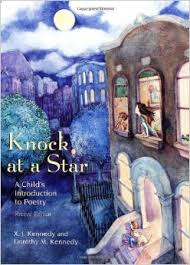
From KNOCK AT A STAR: A CHILD'S INTRODUCTION TO POETRY by X.J. Kennedy

A Takeoff Poem (or Parody)

Choose a rhyme that you already know and make some changes to it. Kennedy gives the example of the common childhood verse, "Twinkle, Twinkle, Little Star." Author Lewis Carroll changed "star" to "bat" and rewrote the rhyme:


Twinkle, twinkle, little bat!
How I wonder where you're at!
Up above the world you fly.
Like a tea tray in the sky.


Because your brain is already familiar verse, it makes it easier to conform to the rhythm. Try Humpty Dumpty, I'm a Little Teapot, Little Miss Muffet, or another childhood favorite.


From HOW TO WRITE POETRY by Paul B. Janeczko

A List Poem

Try a free verse list poem. A free verse has no set rhythm or rhyme.  Pick an interesting topic -- Janeczko includes "The Perfect Friend," "What Cats Do," or "How to Make a Rainbow." Write a list of anything and everything that comes to mind about your topic. Then read over your list. Can you narrow its focus? Maybe "What Cats Do" becomes "What Cats Do at Night." Which words or phrases seem to fit your topic best? Cross off those that are vague or unclear. Focus on word choice - use your thesaurus for more exact words. Try switching around the order of your list. How does the rhythm sound? Is there sense in how the reader moves from one thing on the list to another?

A wonderful example of a list poem is the picture book, THE QUIET BOOK by Deborah Underwood. The author lists all the different types of "quiet," such as "Coloring in the lines quiet," "Hide and seek quiet," and "Bedtime kiss quiet." 


From POEM-MAKING: WAYS TO BEGIN WRITING POETRY by Myra Cohn Livingston

A Haiku

A haiku is a Japanese form with three lines and seventeen syllables. The first and third lines have five syllables and the second line has seven. Traditional haiku celebrate something in nature. Write in present tense, like it is happening right now. Keep the focus narrow. Livingston says to "present a picture of something you want your reader to think about further." She gives this example by Joso:


That duck, bobbing up
from the green deeps of a pond,
has seen something strange...


Choose your words well, with strong verbs and specific adjectives. Writing a powerful haiku takes time and lots of tweaking!


So, fellow GROGgers and other readers, are you ready to try your hand at some poetry? You can do it! Good luck!


Wednesday, August 5, 2015

Pouring Love on The Library of Congress


by Jan Godown Annino


If you bump into a live body in the popular halls of The Library of Congress,
the person will be friendly about it.

In these days of instant gratification, who will traipse through marbled halls dedicated to
words, but the patient folks? The folklife study folks, the African literature
study folks, the children’s literature folks

The Library of Congress (LOC) buildings (I know of three) are populated with devoted staffers, readers, writers & researchers. A genial group, when it comes
to excusing bumpers.

Here is my idiosyncratic #LOC mini-tour, following our family vacation to Washington, D.C.

THE #LOC 2015 MINI TOUR

ART in the HALLS


The Library of Congress is an art gallery.
 Murals of tropical birds & other works, such as this macaw I snapped, by poet/artist Edward Lear,
from valuable books in the the LOC’s collections, caught my eye. They were backdrop in a
room that features tons of maps dear to my own piece of real estate. Which is up next.

 FLORIDA
 I turned a corner and found that my part of the world is
on carefully-curated display in the # Jay and Jean Kislak ongoing exhibit,


I could have dwelled with these artifacts, with rare maps 
& their explanations much longer. But there were other cases to see. I took many fuzzy photos because you're not using flash, but this one turned out. All of the southeast U.S. was once considered Florida.

FIRST BOOKS
The term takes on a new meaning at the Library
of Congress. Such as - the codex books created in the area
we know as Mexico, made before the Spanish Conquest period.


A ROUND ROOM
This room is a work-in-progress, as the LOC endeavors to recreate the
personal library of Thomas Jefferson. It is a thrill to walk into this circle
of books. 

Even when closed, some volume’s pages, looked at
en toto, were a work of design art. Because it’s exactly 200 years since
Jefferson’s personal library helped rebuild our burned national collection
this is a special time to visit.

WHISTLE WHILE YOU LOOK
Who knew the Disney cartoon version of Snow White
derived in great detail from a Swedish-born artist’s interpretation of the
classic folk tale? Not I. Learn much more about the illustrator,
Gustaf Tenggren. On display beautifully in the Swann Gallery.


This long horizontal GUSTAF TENGGREN panel is courtesy of the Art Wood Collection of Caricature and Cartoons.

INK. PENS. COMMENT.
Thanks to the Herblock Foundation, we can ponder various
political cartoonists’ decades of work.


THE. READING. ROOM.
The very one.
When you see the movie, All the President’s Men, you will
recognize this iconic view. 


On this trip I didn’t exercise the right I have to enter the vaulted space.  But I will, I will. I walked through it years before with heart aflutter. This was our view, after climbing extra steps into an airtight windowed balcony that overlooks the research desks and arched book rooms.
To enter the iconic space, obtain your LOC Reader card.  - my official Library of Congress Reader ID begins #ROO like the 2nd part of kanga. Luv it.

Look at how easy it is to become a LOC reader

 CHECKOUT
There are no checkoutable books at the LOC.
Everything in the collection stays. You study it there.
But you can check out innumerable bookish swag at The Library Shop.


I bought an outrageous pencil for show and tell this upcoming school
year, as a Reading Pal. 
I will plant the eyedear with the wee ones that every child should some day visit the LOC – source of giant pencils. And more.

The LOC is so much more.
It’s not held at the LOC or, as in past times, on the National Mall.
But stop by the Washington Convention Center
for friendly readers, writers & affiliated folks at this
LOC-organized of day and night celebration of books. The Honorary
Chairs of it are President Barack and Mrs. Obama.

Underground Tunnel & More
So thank you for visiting the LOC vicariously with me.
I reluctantly close the book on the Library of Congress, as even more thrills & chills undetailed here, await you there.  An underground tunnel. Lively tours. Concerts, poetry readings

The best part is that so much of it is online, every day.